On the morning of February 12, 1947, in a salon at 30 Avenue Montaigne in Paris, ninety outfits came down the runway one after another, hems falling to the ankle and trailing a small shadow across the floor. In the audience there was first silence, then stirring. Carmel Snow, editor-in-chief of *Harper's Bazaar*, caught the designer after the show and told him: your dresses have such a new look. That is how the name New Look arrived.
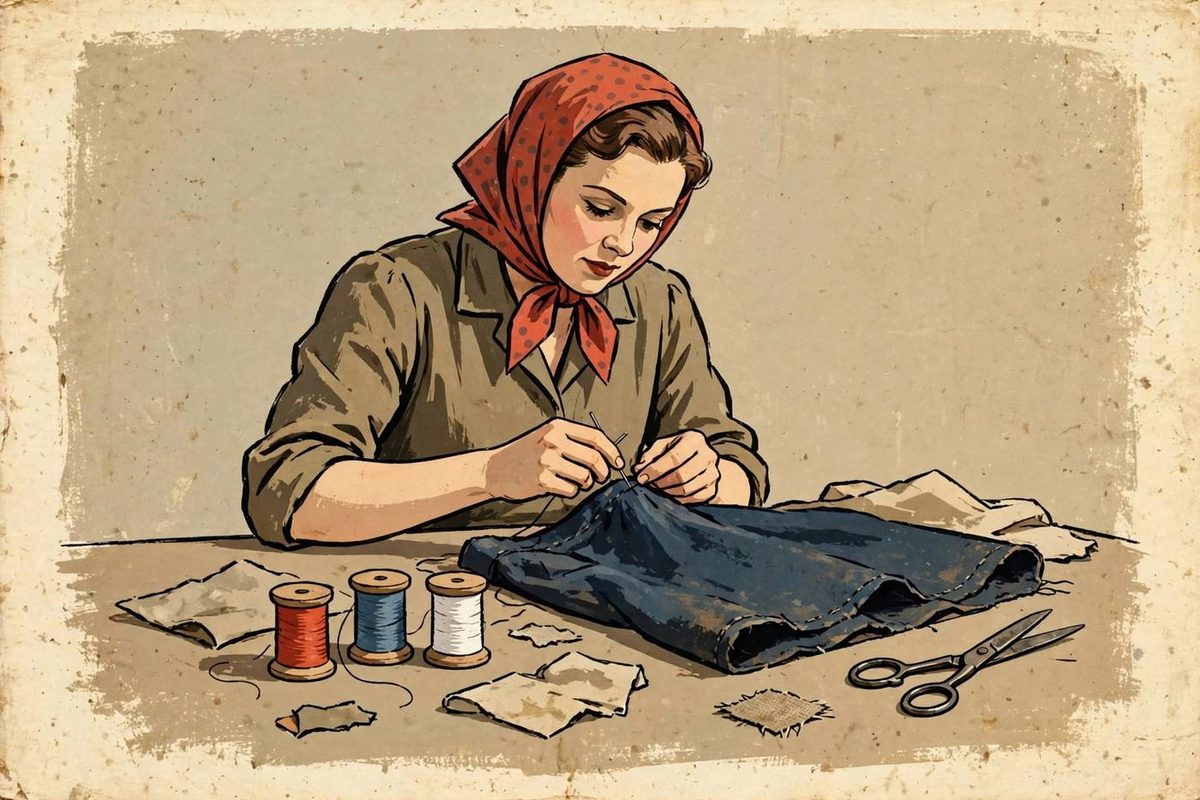
To understand why that day landed like thunder, you first have to see what Parisian women had been wearing in the years before. The war had been over for less than two years. Fabric was supplied by coupon, and in Britain clothes rationing would not end until 1949. Wartime dresses were short — short to above the knee, because cloth had to be saved — and shoulders were square, padded like a uniform. How much fabric a garment used was a matter of accountancy; using an extra inch was close to immoral.
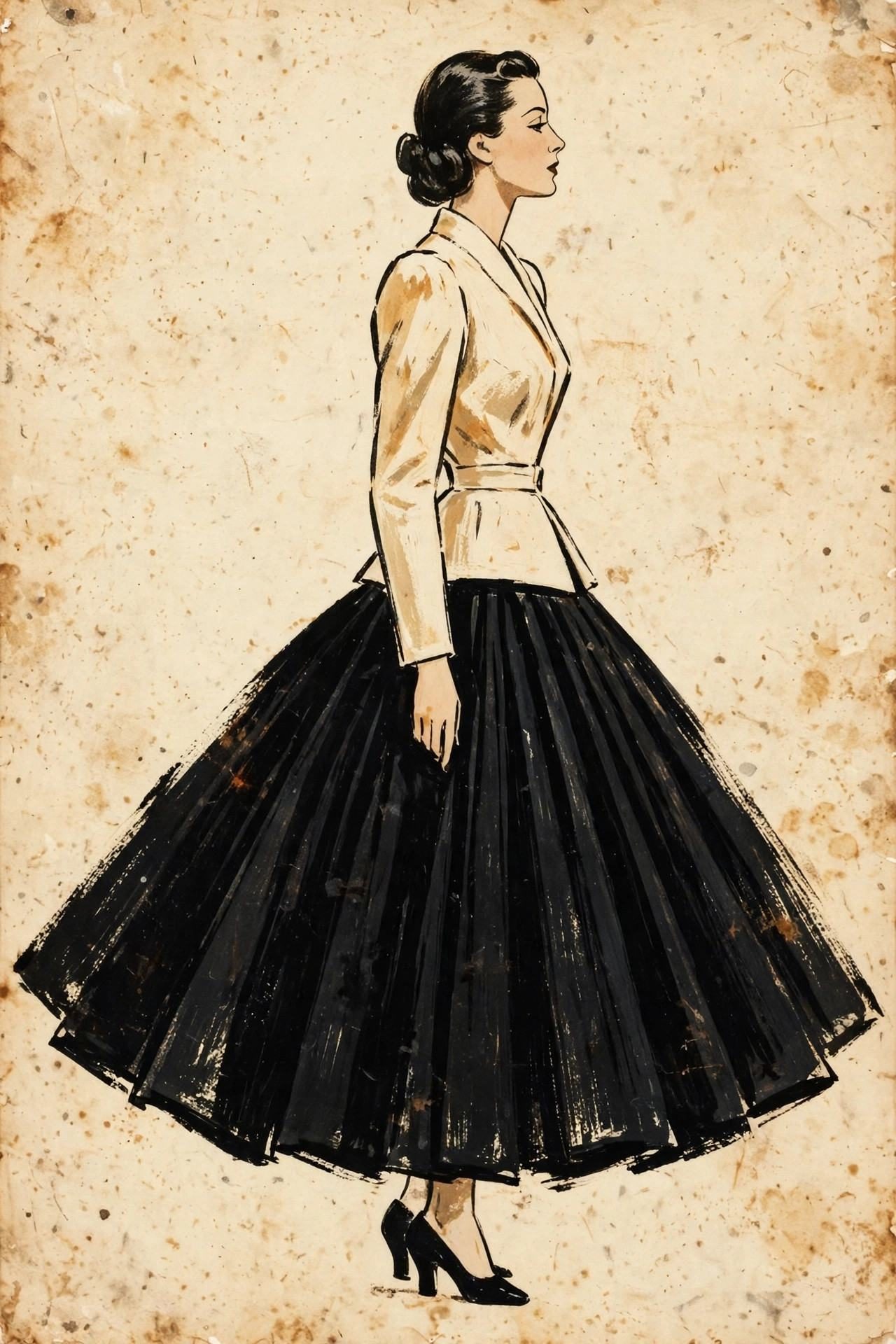
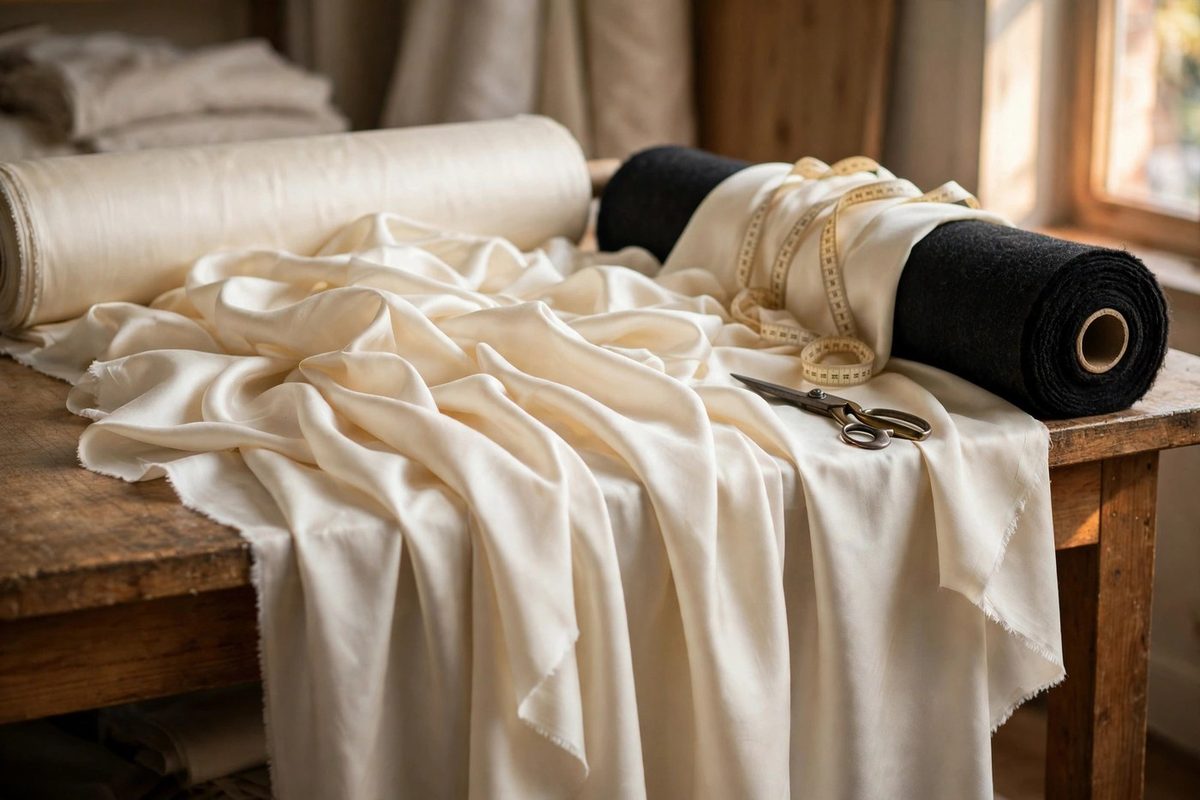
Dior's dresses did exactly the opposite. The waist was cinched in tight, the skirt let out wide, opening like an umbrella as the model turned. The whole collection ran in two lines, one called Corolle — the flower corolla — and one called En Huit, the figure eight; both were about curves. The most famous outfit, the Bar Suit, paired a sculpted ivory silk jacket, fitted close at the waist, with a black wool skirt, pleat folded upon pleat. It was said that some of his skirts used as much as twenty metres of fabric each. Under rationing, this was no longer design. It was a public provocation.
And behind the provocation stood a man happy to watch it happen. Before founding his own house, Dior was not famous; he had worked for Lucien Lelong into his forties. The man who bankrolled his independence was the textile magnate Marcel Boussac, France's cotton king. The fuller the skirts, the busier his mills — he understood that arithmetic perfectly. The most romantic revolution in fashion history began, in fact, on very commercial footing: Dior took his money, on the condition that Paris would be made the capital of world fashion again.
Nor did Dior's own biography look like a revolutionary's. As a young man he had run a gallery and sold paintings; he had worked as a milliner; in his leanest years he kept himself alive selling fashion sketches. His sister Catherine had joined the Resistance during the war, was arrested by the Gestapo and sent to a concentration camp, and luckily came back alive. The house's first perfume was called Miss Dior, and the story often told is that it was for her. A man whose family had seen someone return from the camps may have wanted, in 1947, something more than fashion: to drive the war out of women's lives for good.
The most romantic revolution in fashion history began, in fact, on very commercial footing.
The booing arrived faster than the applause. One story retold throughout fashion history describes a photo shoot on a Paris street shortly after the show, where a model in one of the new dresses was surrounded near a market by housewives who grabbed at her skirt, furious at the waste of cloth. In the United States, small groups formed to boycott the long skirt, for a very practical reason: the moment the new fashion arrived, the good clothes bought during the war were all obsolete overnight — a pointless expense for an ordinary household. The anger was real. A long skirt meant the old wardrobe was void, and those who couldn't keep up were left outside fashion's door.
And yet it won, and won quickly. The reason, most likely, was not in the skirt but in people's hearts. Women who had spent six or seven years in uniform-style jackets and mended clothes wanted badly to be people who could spend money on beauty again. Dior said he wanted to design for flower-like women. It sounds like a light remark, but in 1947 it caught, precisely, a wish an entire era had held in for too long. By 1949, one frequently cited figure credits Dior alone with three quarters of Paris's haute couture exports1 — an astonishing weight, in the foreign-exchange ledger of postwar France's reconstruction, for a house barely two years old. In that same year, 1947, the American department store Neiman Marcus gave him its annual fashion award; he crossed the Atlantic to collect it in Dallas, and American society queued to see the new dresses from Paris. A designer nobody knew, using a single show to push Paris out of the war's shadow and back to the centre of world fashion — that, in itself, was the story postwar France most needed.
Of course, the other side has to be stated plainly. The narrow waist was achieved by lacing women into corsets, and a long skirt is no friend to a woman who has to work, or squeeze onto a tram. From beginning to end, the New Look was a victory about desire, and had nothing to do with comfort. What it did answer, honestly, was one question: how much hardship are people willing to endure for beauty?
Through the whole decade that followed, women lived inside that silhouette. Hepburn's Givenchy, Grace Kelly's gowns — waists were small, skirts were open. In 1951, Britain's Princess Margaret turned twenty-one and was photographed in a white Dior gown; the pictures ran in every British newspaper. Britain had only just begun to recover from rationing a few years before — and if even the royal family stood on the side of the new fashion, the boycotts could never gather weather again. Not until the young people of the sixties took to the street and the miniskirt cut hems short in one stroke did the New Look truly leave the stage. And the way it left was by being overthrown by the next revolution — which is probably the shared fate of all classics.
What it leaves us today is much more than a skirt. The cinched-waist dress in your wardrobe, the knee-length A-line skirt, even the breath you unconsciously draw in when a photo is taken — all of them trace back to that salon. In the seventy-odd years since, fashion has come and gone, waistlines have moved up and down, hems have lengthened and shortened. That one breath hasn't changed: before the shutter clicks, draw it in.