The most exhausting part of a working morning is often not washing up or putting on makeup. It's standing in front of the wardrobe, staring. The wardrobe is stuffed to bursting, yet you feel you have nothing to wear; in the end you grab something at random, go out, and spend the whole day feeling vaguely wrong. I suspect most people know that scene.
Where does the problem lie? There's a plain fact that keeps being overlooked: other people's impression of what you're wearing today comes almost entirely from the outermost layer. You stand in an elevator, on the subway, in front of a meeting-room screen; colleagues and clients glance at you and remember your coat and your outline. Whether underneath it was a white shirt or a grey sweater, almost nobody can recall. Inner layers are worn for yourself. The coat is what's worn for the world to see.

Once that fact clicks, the order of commuting dressing should be reversed: fix the coat first, then throw on whatever goes under it. And the number of coats a person actually needs for a week is three.
Inner layers are worn for yourself. The coat is what's worn for the world to see.
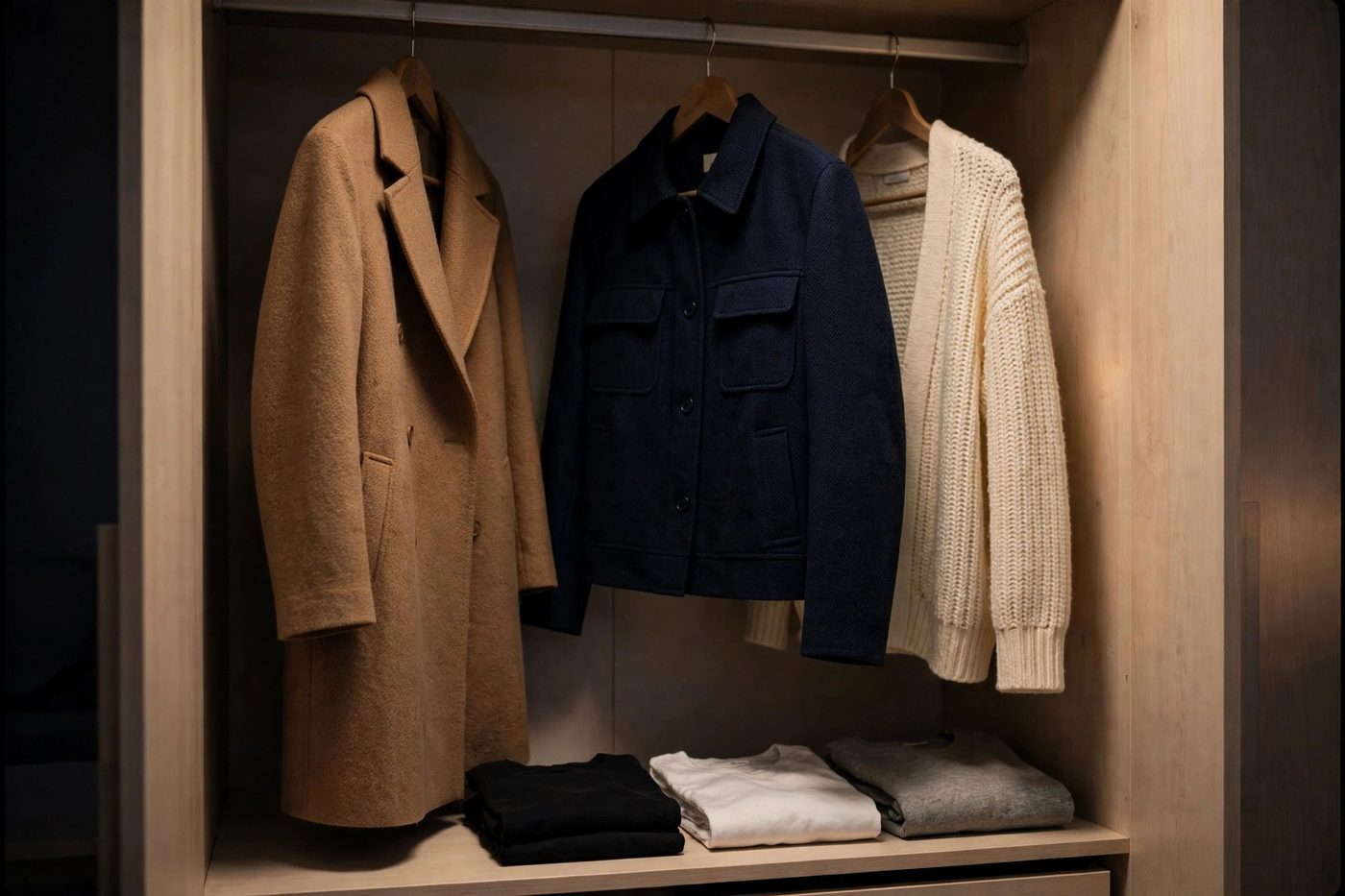
The first: a long coat with clean tailoring — a trench or a wool coat, past the knee. It handles every day that needs presence: meeting clients, giving the report, slightly formal occasions. Grab it with your eyes closed and you won't be wrong. For colour, my own preference runs to deep grey, navy, camel — colours that don't steal the scene and don't quarrel with anything worn under them.
The second: a short jacket — a crisp short trench or a denim jacket, something with a bit of structure to the fabric. It handles the days with running around in them: field work, travel, an afternoon at a warehouse or on site. A short jacket's virtue is that you look sharp and your movement isn't dragged down; it sits far enough from the long coat in temperament that, to everyone else's eyes, you've changed your whole outfit.
The third: something softer — a knitted cardigan, or an unpadded casual blazer. It's the middle ground between the first two: a layer more structure than a sweater, none of a coat's formality. Air-conditioning in the office, a working lunch with colleagues, meeting a friend on the way home — all those neither-here-nor-there occasions, it can catch. In practice, it's often the one used most in a week.
With those three coats settled, the inner layers can be lazy to the extreme. Three basic tops in black, white and grey, plus one striped top — enough. Trousers: just two pairs, one dark tailored pair and one pair of jeans, on rotation. Shoes and bag don't even need to change, because nobody audits your week by staring at your shoes.
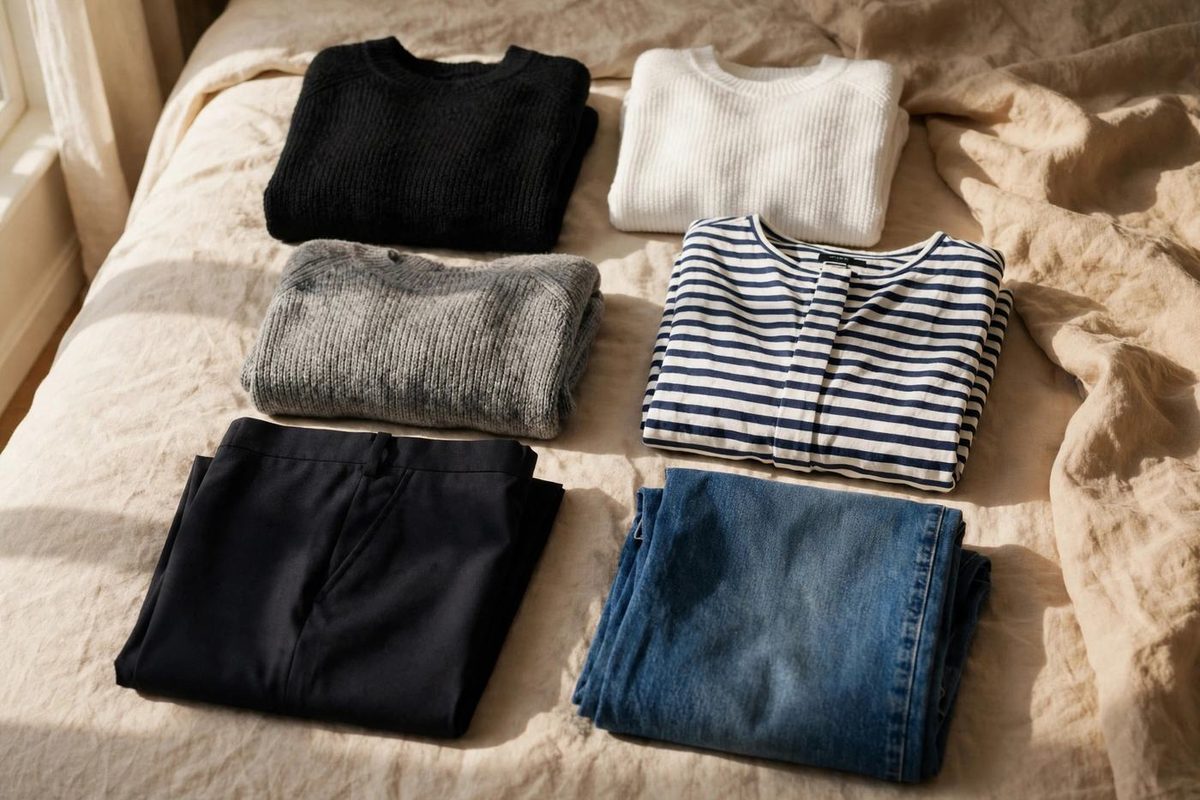
The week's arrangement falls out naturally. Monday, clients: the long coat with a white top and tailored trousers. Tuesday, internal meetings all day: the cardigan with the striped top. Wednesday, out on site: the short jacket with a black inner layer and jeans. Thursday, a report to give: the long coat again, this time over dark grey — at a glance, another outfit entirely. Friday, the most relaxed: grab the short jacket or the cardigan, and you can go straight to dinner after work without going home to change. Five days, not one looks like a repeat, and the total number of garments you've actually deployed is around ten.
The method works because of a small quirk of visual memory: people remember clothes as blocks of shape and outline, not as detail. Changing the coat is changing the outline; changing the inner layer only changes the base colour. So if you want people to feel you look different every day, the thing to move is the outline, not the pattern inside. Plenty of people have overflowing wardrobes precisely because they keep buying inner layers — thirty sweaters bought, the outline never changed, and they tire of themselves first.
Follow that logic, and the test for buying a coat changes too. Don't ask first whether it looks good. Ask how many days a week you'll wear it, and how many of your existing clothes it goes with. My standard: a coat has to combine with at least three pieces already in the wardrobe before it earns its way in the door. One that combines with nothing, however stunning in isolation, becomes an orphan — worn twice, then left hanging there gathering dust.
One more small habit works surprisingly well. On Sunday evening, spend ten minutes hanging the three coats on the outermost row of the wardrobe, with the inner layers folded somewhere within easy reach. On weekday mornings there's no rummaging — you take things in order. Most of the difficulty of dressing is decision, not clothing. Move the decision to the weekend and the morning becomes pure execution; your whole self relaxes a good deal.